3 Things Your Freestyle Might Be Doing That You Can't Feel
Your stroke can feel right and still be costing you speed.
That's one of the most interesting things about swimming technique.
You can finish a session feeling relaxed, strong and convinced that your stroke was working well — then watch the video and see something completely different.
That's because swimming is a highly repetitive movement. When you've swum a particular way for hundreds or thousands of hours, it can feel completely normal, even when it's not particularly efficient.
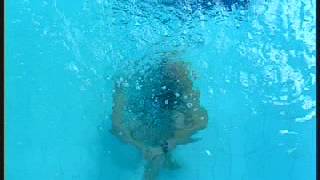
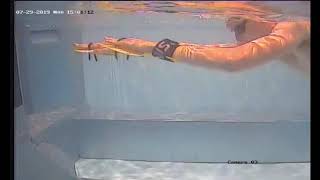
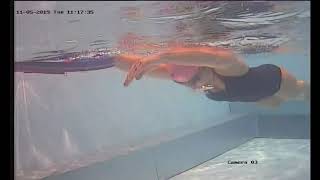
And this is where video analysis becomes so useful.
You can't always feel what your body is doing in the water.
But you can see it.
Here are three things I regularly look for when analysing freestyle.
1. Your rotation isn't coming from where you think it is
Good freestyle isn't simply about rolling from side to side.
The rotation should be controlled and connected through the body, with the hips playing an important role.
One common problem is that swimmers try to create rotation primarily with the shoulders and upper body.
It can feel like you're rotating properly.
From above the water, it may even look reasonable.
But underneath, the hips may be relatively static while the shoulders do most of the work.
That can make the stroke feel disconnected and can make it harder to maintain a streamlined position.
Think about rotating around your long axis rather than simply rocking your shoulders from side to side.
The aim isn't to exaggerate the rotation.
It's to create a smooth connection between the hips, torso and shoulders so that the stroke works as one movement.
This is particularly important as you fatigue.
A movement pattern that is slightly inefficient at 500m can become much more costly at 1,900m or 3,800m.
What can help?
One of the drills I often use is long dog paddle.
It slows the stroke down and removes some of the complexity of normal freestyle, allowing you to concentrate on what the arm and body are actually doing.
You can then start to feel the connection between body position, rotation and the underwater pull.
But the important part is transferring that feeling back into normal swimming.
A drill isn't the goal.
The better movement is the goal.
2. Your catch isn't as strong as it feels
The catch is one of the most important parts of the freestyle stroke.
It's also one of the easiest things to get wrong.
A swimmer can feel as though they're "catching the water" because their hand enters, extends forward and then starts pulling.
But video can reveal that the elbow is dropping, the forearm isn't positioned effectively, or the swimmer is slipping water rather than anchoring the hand and forearm effectively.
The result?
You're working hard, but you're not getting as much propulsion from each stroke as you could.
A more controlled catch involves maintaining a strong position through the hand and forearm while keeping the elbow relatively higher as the forearm moves into the pulling position.
It's not about forcing an exaggerated "high elbow" position.
It's about creating a better surface against the water and controlling the pressure through the catch.
Again, this is something that can be difficult to feel.
If you've always dropped your elbow, that may simply feel like normal swimming.
Video gives you another perspective.
Why does this matter for triathletes?
Because improving your catch isn't just about making you faster.
It's about improving propulsive efficiency.
If each stroke produces more useful forward movement, you may be able to maintain your race pace with less wasted effort.
And that's hugely valuable when you've still got 180 km of cycling and a marathon to come.
3. Your hand entry may be crossing the centre line
This is one of the most common things I see when looking at swimmers from above.
The hand enters the water and travels across the body's centre line rather than staying aligned with the shoulder.
It might not feel like you're crossing over.
In fact, it can feel perfectly straight.
But look at the swimmer from above and suddenly the problem becomes obvious.
Imagine your body travelling along two parallel train tracks.
Your left hand should generally enter and move along the left track.
Your right hand should stay on the right track.
If your right hand crosses towards the centre line, you're effectively steering across your body.
That can affect:
shoulder position
stability
rotation
catch mechanics
your ability to apply force effectively
And it can contribute to unnecessary lateral movement through the stroke.
The correction isn't necessarily complicated.
But first, you need to see it.
Why technique matters even more in open water
All three of these issues can become more significant when you move from the pool into open water.
In the pool, you have a black line to follow.
You have a predictable environment.
You don't have to sight.
You don't have waves hitting you.
And you don't have 500 other swimmers around you.
Open water removes all of those advantages.
Suddenly you need to:
Sight without destroying your body position.
Swim straight without a line on the bottom.
Adapt your stroke to chop and waves.
Maintain your rhythm around buoys.
Draft behind other swimmers.
Deal with contact.
Change pace when necessary.
And you need to do all of this while maintaining an efficient stroke.
That's why I don't think open-water technique is simply about taking your pool stroke and putting it in a lake or the sea.
Open-water swimming is a skill in its own right.
Your stroke needs to be efficient, but it also needs to be adaptable.
Technique needs to survive fatigue
There's another reason technique matters so much for triathletes.
Your stroke at 400m isn't necessarily your stroke at 1,900m.
And your stroke at 1,900m isn't necessarily your stroke at 3,800m.
As fatigue builds, small technical problems tend to become bigger.
The elbow drops.
The body position deteriorates.
The hand starts crossing over.
The breathing becomes rushed.
The stroke shortens.
The legs begin to sink.
You may still be swimming at the same pace, but you're having to work considerably harder to do it.
That's why I like to think about technical durability.
It's not enough to have good technique when you're fresh.
You need to be able to maintain it when you're tired.
And that's something you can train.
Don't just swim more. Swim better.
More swimming will certainly improve your fitness.
But if you're repeating the same inefficient movement thousands of times, more isn't necessarily the complete answer.
Sometimes the biggest improvement comes from identifying what is actually happening in your stroke, understanding why it's limiting you, and then deliberately practising a better movement.
That might mean working on:
body position
hip-driven rotation
catch mechanics
hand entry
breathing
alignment
sighting
stroke rhythm
open-water skills
The key is not simply knowing what the problem is.
You need to know what to do about it.
That's where targeted drills and purposeful practice come in.
You can't always feel it. But you can see it.
This is why I use video analysis with swimmers.
I'm not interested in giving you a long list of things to think about while you're swimming.
The objective is to identify the few things that will make the biggest difference to your stroke, show you what is actually happening, and then give you specific ways to practise the correction.
See it.
Understand it.
Drill it.
Swim it.
Repeat it.
Eventually, the new movement becomes part of your normal stroke.
And that's when technique becomes really valuable.
You don't want to be thinking about your elbow, hand entry and rotation halfway through a 3,800m Ironman swim.
You want your technique to hold together almost automatically.
Good swimming isn't about making every stroke perfect.
It's about making every stroke more effective.
And sometimes, the first step towards swimming better isn't another hard session.
It's simply seeing what your stroke is actually doing.
Want to see your stroke from a different perspective?
At Speedy Swimming, I offer 1:1, 2:1 and 3:1 swim video analysis sessions at Guildford Lido, combining in-water coaching with full video analysis.
Sessions are designed around your individual stroke and goals — whether you're learning front crawl, training for your first triathlon, improving your open-water skills or looking to become more efficient over longer distances.
Stop guessing. See your stroke. Make the changes. Swim better.
📍 Guildford Lido
🎥 Full swim video analysis included
👤 1:1, 2:1 & 3:1 sessions available
📩 Message me to find out more or book a session.








Comments