Unlock Your Front Crawl Potential with a Technique Review
You can swim front crawl every week and still have no clear idea what your stroke actually looks like.
That is not a lack of effort. It is the nature of swimming. Your face is in the water, your body is moving, your breathing changes your balance, and the feedback you get while swimming is often based on feel rather than fact.
Many swimmers know something is not quite right. The legs sink. Breathing feels rushed. The shoulders tire too soon. A pace that should feel steady starts to feel like hard work. Yet without seeing the stroke from above and below the water, it is difficult to know what is causing the problem.
A focused front crawl technique review gives you that missing view. With above- and underwater video analysis, you can see what is really happening in your stroke, identify the biggest areas affecting your swimming, and leave with clear priorities to work on next.
Why front crawl can feel harder than it should
Front crawl can look simple from the poolside. One arm pulls, the other recovers, the legs kick, and the head turns to breathe. In practice, small timing issues can create a lot of drag.
A swimmer may be fit enough to hold a steady pace, but still waste energy through:
A low body position
A wide or crossing arm entry
A rushed breath
A kick that creates effort but little balance
A short or ineffective pull
Poor timing between rotation, breathing and catch
These issues often link together. For example, if the head lifts during breathing, the hips may drop. If the hips drop, the legs create more drag. If the legs drag, the swimmer kicks harder. That harder kick raises effort but may not improve speed.
The swimmer feels the result as fatigue, not always as the true cause.
That is why simply swimming more lengths does not always fix the problem. Fitness helps, but technique decides how much of that fitness turns into forward movement.
The problem with relying on feel alone
Feel matters in swimming. Good swimmers develop a strong sense of rhythm, pressure and balance in the water. Yet feel can also be misleading.
A movement can feel powerful because it uses a lot of effort. That does not mean it is moving you forward well. A breath can feel quick, while still breaking your body line. A kick can feel busy, while your legs are mainly working to stop the body from sinking.
The biggest challenge is that key parts of front crawl happen where you cannot see them.
You cannot watch your hand position during the catch. You cannot easily judge whether your legs trail low behind you. You may not know if your recovering arm swings across the centre line. You may think you are rotating well, while the video shows most of the movement coming from the head and shoulders.
A coach can see these patterns from the poolside, but video makes the feedback much clearer. It removes guesswork. It gives you a real picture of your stroke, rather than a memory of how it felt.
One short review can often reveal the one or two technique changes that make the biggest difference to your swimming.
What happens in a Front Crawl Technique Review
A Front Crawl Technique Review is designed to give a clear picture of your current stroke and a practical direction for improvement.
It is not a fitness test. It is not about judging how fast or slow you are. The aim is to understand how you move through the water and which technical areas are costing you the most energy.
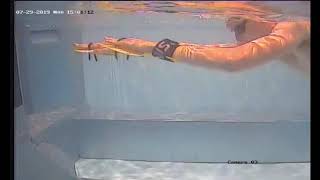
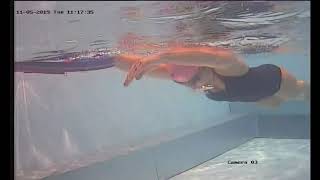
The review uses above- and underwater video analysis so your stroke can be assessed from different angles. This matters because above-water footage and underwater footage show different parts of the swim.
Above the water, it is easier to assess:
Breathing timing
Head position
Arm recovery
Rotation
Overall rhythm
Under the water, it is easier to assess:
Body position
Leg depth
Hand entry
Catch and pull path
Kick pattern
Alignment through the stroke
When these views are put together, you get a more complete picture. The aim is not to list every tiny flaw. That can be overwhelming and often unhelpful. The aim is to identify the main priorities that will have the greatest effect on efficiency.

What the video can reveal about your stroke
Video analysis is useful because it shows cause and effect. A swimmer may arrive with one concern, then discover that the root issue sits somewhere else in the stroke.
Body position and balance
A low body position is one of the most common reasons front crawl feels hard. When the legs sit too low, the body has to push more water out of the way. This raises effort and makes the stroke feel heavy.
Video can show whether the hips and legs are sitting close to the surface, or whether they drop during certain parts of the stroke. The footage can also show whether breathing causes the body position to change.
Better balance can make front crawl feel smoother without asking the swimmer to work harder.
Breathing timing and head movement
Breathing is often where rhythm breaks down. Some swimmers lift the head slightly. Others turn too late, hold the breath too long, or rush the inhale. These patterns can affect rotation, arm timing and body line.
A review can show what happens just before, during and after the breath. This is often more useful than simply being told to “breathe better”. The video gives a clear view of the movement that needs to change.
Small improvements here can have a big effect, especially for open-water swimmers and triathletes who need controlled breathing under pressure.
Hand entry and alignment
Where the hand enters the water sets up the rest of the stroke. If the hand crosses the centre line, the body may snake from side to side. If the hand enters too wide, the catch can become weak. If the arm reaches too far and drops, the swimmer may lose early hold on the water.
From above and below, video can show whether the hand enters in line with the shoulder and whether the arm sets up a strong catch.
This is not about copying a perfect textbook stroke. It is about finding a position that suits the swimmer and helps them move forward with less wasted movement.
Catch and pull
The catch is one of the hardest parts of front crawl to feel. It happens under the water, and many swimmers cannot tell whether they are holding the water well or slipping through it.
A video review can show whether the forearm and hand create an effective pulling surface. It can also show if the arm drops, presses down, pulls too wide, or exits early.
For swimmers who feel they work hard but do not travel far with each stroke, this part of the review can be especially valuable.
Kick and leg position
A front crawl kick does not need to be frantic to be useful. For many triathletes and distance swimmers, the kick supports body position and rhythm more than it provides major propulsion.
Video can show whether the kick is helping balance or creating drag. Common patterns include knees bending too much, feet sitting too low, or the kick widening during breathing.
The goal is a kick that supports the stroke without draining the swimmer’s energy.
Why one focused review can be enough to change direction
Regular coaching is valuable, but not every swimmer needs a long programme straight away. Sometimes the first step is simply to understand what is happening.
A one-off technique review can give you:
A clearer understanding of your current front crawl
You see your stroke as it really is, not as it feels from inside the water.
The biggest opportunities for improvement
Instead of trying to fix everything, you know which areas matter most.
Personalised technical priorities
Your next steps are based on your own footage, not generic advice.
Practical guidance on what to focus on next
You leave with a clearer direction for training, drills or future coaching.
This is especially helpful when a swimmer has reached a plateau. If more lengths are not improving your pace or comfort, the issue may not be effort. It may be technique.
The review gives structure to your swimming. Rather than turning up at the pool and hoping things improve, you know what to look for in each session.
Who benefits most from a technique review
A front crawl review can help many types of swimmer, but it is particularly useful for people who already swim and want more clarity.
Triathletes
Triathletes often have limited time in the water. Many balance swimming with cycling, running, strength work and recovery. That makes efficient swim training even more important.
A review can help identify the technical changes that may make open-water swimming feel more controlled. Breathing, body position and rhythm are especially important when swimming in a wetsuit, around other athletes, or in choppier conditions.
For triathletes, the aim is not only speed. It is also arriving at the bike feeling composed rather than drained.
Open-water swimmers
Open-water swimmers need a stroke that holds together over distance. Pool technique does not always transfer perfectly to open water, but a strong front crawl base still matters.
Video analysis can show whether your stroke is efficient enough to support longer swims. It can also highlight breathing patterns, alignment issues and timing problems that may become more noticeable in open water.
The clearer your technique, the easier it is to adapt when conditions change.
Fitness swimmers
Many fitness swimmers swim regularly for health, enjoyment and routine. They may not be aiming for races, but they still want front crawl to feel smoother and more rewarding.
If front crawl feels like a battle, a review can show why. Often, a few focused priorities can help swimming feel less tiring and more controlled.
That can make regular pool sessions more enjoyable and more productive.
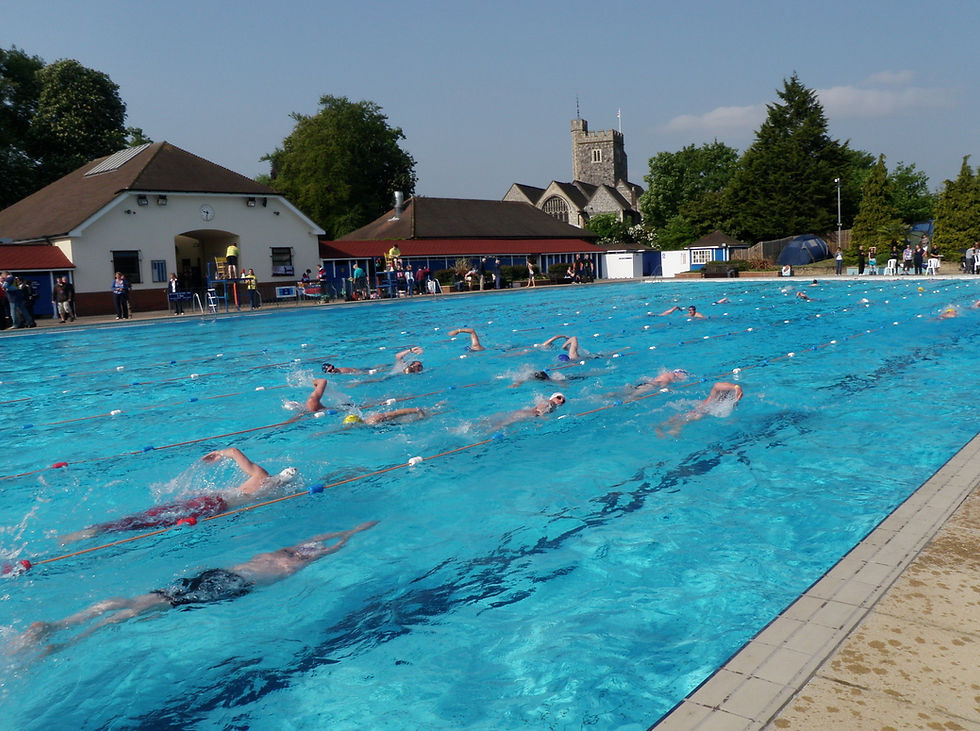
What to expect at Guildford Lido
The one-off review takes place at Guildford Lido and costs £100.
The session is built around observation, video capture and feedback. You do not need to arrive with perfect technique or race-level fitness. The review is there to meet you where you are and give you useful direction.
It is also suitable for small groups or swimming partners who want to arrange a block. This can work well for triathlon club friends, open-water training partners, or a small group of fitness swimmers who want shared feedback while still receiving individual priorities.
If you are unsure whether the review is right for you, ask yourself a few simple questions:
Do your legs sink when you swim front crawl?
Does breathing break your rhythm?
Do you tire sooner than expected?
Have you stopped improving despite regular swimming?
A review can show whether this comes from head position, breathing, kick, or balance.
Video can reveal what changes in your stroke as you turn to breathe.
The footage can help identify where energy is being wasted.
Clear technical priorities can give your training a new focus.
How to get the most from the review
You will gain more from the session if you arrive with a clear idea of what you want to understand. That does not mean diagnosing your own stroke. It means noticing what you feel during normal swimming.
Before the review, think about:
When your stroke starts to feel difficult
Whether one breathing side feels easier than the other
Whether you struggle more at slow, steady pace or faster efforts
What feedback you have received before
What your swimming goal is over the next few months
During the review, stay open to what the video shows. Sometimes the biggest opportunity is not the thing you expected. A swimmer may think the kick is the main issue, then discover the breath is causing the legs to drop. Another may focus on arm speed, while the footage shows a weak catch.
After the review, choose a small number of priorities and work on them consistently. Technique improves best when the focus is clear. Trying to change body position, breathing, catch, kick and timing all at once usually creates confusion.
One or two well-chosen priorities are easier to practise and easier to feel.

A clearer direction for every length
Front crawl improvement does not always come from harder sets or more metres. Often, it starts with seeing the stroke clearly.
A technique review gives you that view. It shows what is helping, what is holding you back, and where your attention should go next. For triathletes, open-water swimmers and fitness swimmers, that clarity can make training feel more purposeful.
The one-off Front Crawl Technique Review at Guildford Lido is £100 and uses above- and underwater video analysis to assess your stroke. If you want to understand your technique and take a more informed approach to improving it, send a message to enquire or book your review. You can also ask about arranging a block for you and your swimming partners.
One focused review. A clearer direction for your swimming.








Comments