Swimming Drills Every Triathlete Should Know
Swimming is a critical component of triathlon, often setting the tone for the rest of the race. Improving your swim technique and efficiency can save precious energy and time. Incorporating specific swimming drills into your training routine can help you develop better form, increase endurance, and boost confidence in open water. This guide covers essential swimming drills every triathlete should know to enhance their performance.
Why Swimming Drills Matter for Triathletes
Swimming drills are targeted exercises designed to improve specific aspects of your stroke, breathing, and body position. Unlike just swimming laps, drills focus on technique, helping you build muscle memory and correct bad habits. For triathletes, this is especially important because:
Efficient swimming conserves energy for cycling and running.
Good technique reduces the risk of injury.
Drills improve speed and endurance.
They build confidence in open water conditions.
By regularly practicing swimming drills, you can transform your swim from a challenging leg of the triathlon into a strength.

Essential Swimming Drills for Triathletes
Here are some of the most effective swimming drills that triathletes should incorporate into their training sessions:
1. Catch-Up Drill
This drill helps improve your arm extension and timing. Swim freestyle but only start the pull with one arm after the other arm has fully extended in front of you. This encourages a longer stroke and better body alignment.
How to do it:
Extend your right arm forward.
Keep your left arm at your side.
Pull with your right arm while your left arm stays extended.
When your right hand "catches up" to your left, switch arms.
Benefits:
Enhances stroke length.
Improves coordination.
Encourages a smooth, continuous stroke.
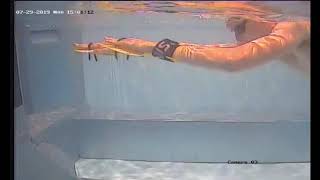
2. Fingertip Drag Drill
This drill focuses on high elbow recovery and smooth arm movement. As you recover your arm over the water, drag your fingertips lightly along the surface.
How to do it:
Swim freestyle normally.
During the recovery phase, drag your fingertips along the water.
Keep your elbow high and relaxed.
Benefits:
Promotes high elbow recovery.
Reduces shoulder tension.
Improves stroke efficiency.
3. 3-3-3 Drill
This drill alternates breathing and stroke patterns to improve bilateral breathing and balance.
How to do it:
Swim 3 strokes breathing on the right side.
Swim 3 strokes breathing on the left side.
Swim 3 strokes breathing every stroke (front breathing).
Benefits:
Develops bilateral breathing.
Enhances body rotation.
Improves overall stroke balance.

4. Kickboard Drill
Using a kickboard isolates your legs to strengthen your kick and improve body position.
How to do it:
Hold a kickboard with both hands.
Keep your head in the water, looking down.
Kick from the hips with pointed toes.
Maintain a steady, rhythmic kick.
Benefits:
Builds leg strength and endurance.
Improves body position in the water.
Enhances kick technique.
5. Sculling Drill
Sculling helps you develop a better feel for the water and improves propulsion.
How to do it:
Extend your arms in front of you.
Move your hands in a figure-eight motion.
Keep your elbows high and wrists flexible.
Focus on the sensation of water pressure.
Benefits:
Increases water sensitivity.
Improves hand positioning.
Boosts propulsion efficiency.
How to Incorporate Swimming Drills into Your Training
To get the most out of these drills, integrate them into your swim workouts thoughtfully. Here are some tips:
Warm-up first: Start with 5-10 minutes of easy swimming.
Drill sets: Dedicate 15-20 minutes to drills, alternating between different types.
Focus on quality: Perform drills slowly and deliberately to reinforce good technique.
Combine drills with intervals: After drills, swim sets of intervals to apply improved technique at race pace.
Use equipment: Tools like kickboards, pull buoys, and paddles can enhance drill effectiveness.
Seek feedback: If possible, get a coach or training partner to observe and provide tips.
For triathletes looking to elevate their swim skills, professional triathlon swimming training can provide tailored guidance and structured programs.

Tips for Open Water Swimming Success
While pool drills are essential, triathlons often take place in open water, which presents unique challenges. Here are some tips to complement your drill work:
Practice sighting: Lift your head periodically to spot landmarks and stay on course.
Simulate race conditions: Train in open water when possible to get used to waves, currents, and temperature.
Work on starts: Practice mass starts and swimming in packs to build confidence.
Breath control: Use drills that improve your ability to breathe bilaterally and under pressure.
Wetsuit familiarity: Train in your wetsuit to get comfortable with buoyancy and movement restrictions.
Combining pool drills with open water practice will prepare you for race day conditions.
Building a Swim Drill Routine for Triathlon Training
Creating a balanced swim drill routine can help you steadily improve. Here’s a sample weekly plan:
| Day | Focus | Drills Included | Duration |
|-----------|------------------------|------------------------------------|-----------|
| Monday | Technique & Form | Catch-Up, Fingertip Drag, Sculling | 45 minutes|
| Wednesday | Endurance & Strength | Kickboard, 3-3-3 Drill | 60 minutes|
| Friday | Speed & Race Prep | Mixed drills + intervals | 60 minutes|
Adjust the volume and intensity based on your fitness level and race schedule. Consistency is key to mastering swimming drills.
Mastering these swimming drills will not only improve your technique but also boost your confidence and efficiency in the water. Whether you are a beginner or an experienced triathlete, dedicating time to focused swim drills is a smart investment in your triathlon performance. Dive in, practice regularly, and watch your swim times drop!








Comments