Which Paddles Help Fix Which Part of Your Front Crawl Technique — and Why?

Why swim technique lessons matter (especially for front crawl)
Swimming is very different from running or cycling. Water is around 800 times denser than air, which means every small technical error creates a lot of resistance. In simple terms, if you try to swim twice as fast, you’d need roughly four times the energy output. Very few people can hold that for long — especially in open water or longer triathlon swims.
On top of that, in front crawl your head is underwater for roughly half the stroke cycle. Breathing is restricted, vision is limited, and balance is constantly being challenged. Unlike cycling or running, you can’t just “push harder” and expect results. Poor technique doesn’t just slow you down — it makes swimming feel stressful and exhausting.
That’s why front crawl is often described as around 70% technique. Good swimmers aren’t necessarily stronger; they’re better at:
Holding water with the hand and forearm
Maintaining alignment through the stroke
Using rotation instead of muscling the pull
Breathing without disrupting rhythm
This is also why progress can stall when swimmers try to self-coach. You can’t see what your hands, elbows or body position are doing underwater, and it’s very easy to practise the wrong thing repeatedly.
Why coached swim lessons work better
A good coach can spot the one or two key things that are holding you back — not overload you with changes. They can:
Identify your personal correction points
Choose drills that actually match your stroke
Make sure you’re doing those drills correctly (most swimmers aren’t)
Explain why a change matters, not just what to do
At Speedy Swimming, Nick works hands-on with swimmers to build understanding as well as skill. Small technical changes — hand pitch, catch height, body alignment or breathing timing — can unlock speed and efficiency very quickly when applied correctly.
Training at Guildford Lido also helps. The space, visibility and calmer environment make it easier to focus on technique, awareness and feel for the water without the pressure of lane swimming.
The result
Swim faster with less effort
Breathe more calmly and consistently
Feel in control rather than rushed
Build a stroke you can actually sustain
Technique first, fitness second — because fitness on top of poor mechanics just magnifies the problem.
If you’re looking to finally understand why your swim feels hard, and how to fix it, structured technique lessons are the fastest way forward.
Technique paddles help to reinforce good movement patterns and ingrain good habits into muscle memory better, as they give you the feedback your swim coach provides outside of swim lessons. Thats all we're doing really, breaking a bad habit, and replacing it with a newer improved and better one!
Which Paddles Help Fix Which Part of Your Front Crawl Technique — and Why?
Swim paddles aren’t just about strength. Used correctly, the right paddles can highlight flaws, improve feel for the water, and help retrain key parts of your front crawl technique.
During January training, many triathletes will move into light force and strength-endurance work as part of Aerobic Base Phase 2.
This is where technique paddles are especially useful — improving mechanics while gently adding load.
Broadly, paddles fall into two categories:
Technique paddles – stroke correction, awareness, alignment
Strength paddles – overload for lats, triceps and forearms
This guide focuses mainly on technique-led paddles, with a few hybrid options included.
Getting your stroke dialled in relies on feel, alignment, pitch and timing. The right tools can make technical flaws immediately obvious so your brain and body learn faster.
In training (especially in Base Phase 2) we mix technique paddles with a few other focused aids to drive awareness and strength at the same time.
1. Hand pitch, crossover & alignment
FINIS Freestyler Paddles

Best for:
Entry crossover
Pull path drifting under the body
Loss of positive palm pitch
These are excellent for swimmers who cross the midline on entry or during the pull. If your hand pitch turns in or out, you’ll feel it immediately.
Improves:
Hand alignment
Positive palm pitch
Distance per stroke (DPS)
“Prevents hand entry crossover that causes shoulder injury.” – FINIS
Sculling-style paddles / Finger paddles

(Zone3, Speedo Biofuse)
Best for:
Catch awareness
Subtle hand pitch errors
Because they’re small, these increase sensitivity without adding load. If your pitch changes, pressure disappears.
Improves:
Catch feel
Purchase on the water
Palm pitch awareness
3. Muscle Isolation & Stroke Awareness
Finis ISO Paddles

These strapless paddles are clever: they create a slight imbalance so you have to actively stabilise your stroke. That forces better hand position and awareness around the catch phase.
They also let you isolate different muscles depending on how you wear them, which builds stroke stability without big load.
Why it helps: heightens feel for the water and makes uneven catches obvious.
4. Forearm Engagement & Rotation Feedback
Mad Wave Grabber Forearm Paddles

These help you use your forearm and hand as a single unit — which is what you actually pull with in crawl. They guide you toward a stronger, more vertical pull path and help with forearm rotation awareness.
Why it helps: makes EVF and rotation more tangible so you stop “dropping” the elbow mid-pull.
5. Technique Without Overload
Mad Wave Egg Trainer

These interesting paddles effectively remove the hand as a big force producer and force the whole stroke to rely on body rotation, core tightness and being forearm dominant. They naturally push you into a stronger pull with better alignment.
Why it helps: makes you focus on rotation and propulsion learned through structure, not brute force.
6. Stroke Feel + Catch Refinement
FINIS Agility Floating Paddles

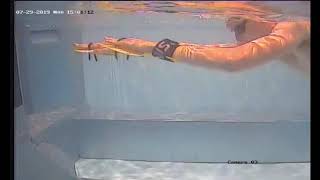
These strapless, lightweight paddles are feedback machines. If your hand isn’t anchored or your elbow drops, they’ll shift or fall off — giving instant technique cues.
Why it helps: builds feel and reinforces correct shape through feedback on each stroke.
Catch quality & Early Vertical Forearm (EVF)
FINIS Forearm Fulcrums

Best for:
Early vertical forearm
Wrist and forearm alignment
These lock your wrist and forearm into the correct angle, reinforcing EVF through muscle memory.
Improves:
EVF
Catch height
Pull efficiency
“Specifically designed for stroke refinement and technique focus.” – FINIS
8. Optional Classic/Strength Paddles
Mad Wave Paddles Pro and Mad Wave Paddles Extreme are good if you’re past basic technique and want a little extra resistance.
They build shoulder and lats strength while still letting you feel water — just don’t overuse them early in season.
Why it helps: strength with some technique reinforcement.
9. Hybrid strength + technique paddles
TYR Catalyst 2 Paddles

Best for:
Swim-specific strength with lower injury risk
Curved shape distributes pressure more evenly and reduces shoulder stress.
Improves:
Strength
Technique under load
Catch consistency
Increase usage slowly — around 100m per week.
“Improves water feel and distributes pressure evenly for reduced shoulder stress.” – TYR
A note on large strength paddles
Dinner-plate-sized paddles do build strength, but if you have:
A straight-arm catch
Poor EVF
Shoulder history
…they can reinforce bad habits or overload joints. Technique first, load second.
Rotation & Body Position Tools
Finis Tech Toc

Not a paddle, but brilliant for timing and rotation. It clips around the waist and makes a sound as you roll from side to side, giving instant feedback on hip rotation and rhythm — key for a balanced, powerful crawl.
Use it for:
finding better rotation and rhythm rather than just arm pull mechanics.
Kick & Body Position
Finis Z2 Gold Zoomers Fins

Short-blade training fins that speed up your kick cadence, strengthen ankles and help keep your legs high in the water.
They also build leg conditioning without taking you too far from a proper freestyle kick pattern.
Why it helps: keeps your body flatter and engages your hips/legs without messing up your kick timing.
Putting It All Together
Feel & pitch: freestyler/ISO paddles
Forearm focus: Mad Wave Grabber / Egg Trainer
Feedback drills: Agility paddles + Tech Toc
Strength & body position: classic paddles and short fins
Used smartly (short repeats, drills first then a few technique paddle reps), these tools accelerate motor learning without overfatiguing you or cementing bad patterns.
Other useful stroke-improving kit
Not paddles, but worth mentioning:
Finis Hydro Hip (Core Strengthening Tool) https://www.finisswim.eu/Hydro-Hip

Snorkel – removes breathing as a variable
Pull buoy (used sparingly) – body position awareness
Final thoughts
The right paddle won’t fix your stroke on its own — but the right paddle for the right problem gives instant feedback your brain can’t ignore.
If you’re unsure what’s holding your swim back, video analysis is always the fastest route to clarity.
1:1 front crawl coaching & video analysis Guildford Lido
Semi Private 2:21 and 3:21 swim lessons at Guildford Lido
Intermediate swim squads Guildford Lido
Online swim & triathlon training plans
Swim Coaching Packages we offer:
1. 1:1 front crawl coaching & video analysis, & Semi Private 2:21 and 3:21 swim lessons at Guildford Lido
2. Triathlon Training Review
3. Swim squads for intermediates, held at Guildford Lido 50 metre pool:
4. Open Water Swim Coaching Lessons

📞 07958 635142📧 speedyswimming@gmail.com
Copyright © Speedy Swimming
Nick is a level 3 British Triathlon Coach, Level 1 Training Peaks coach, and Training Bible coaching Master endurance coach with 25 years’ experience in triathlon, founder and Head Coach for Speedy Swimming.
If you have a swim technique problem… and if you can find us… maybe you can hire the Speedy Swimming Team.








Comments